
Laurens County Arrest Records and Court Charges
In Laurens County, the arrest side usually begins with a law-enforcement agency and may appear through the Laurens County Detention Center, the Sheriff’s Office, or the public inmate search. The jail record can show that a person was received, processed, and held on a felony or misdemeanor allegation. Research on the Laurens County jail says the detention center receives, processes, and houses people charged with felony or misdemeanor violations. It also houses people who cannot make bond while they wait for court.
The court charge record begins when a charge is filed in the court system. Magistrate Court handles warrants, first appearances, bond hearings, preliminary hearings, and pre-warrant hearings. Superior Court handles felony criminal cases in the Dublin Judicial Circuit. The District Attorney makes prosecution decisions in circuit criminal matters, while the Clerk of Superior Court maintains the court file. Jail booking details fit better with Laurens County inmate records; the final case history, plea, disposition, and sentence fit better with Laurens County criminal court records.
The Laurens County Magistrate Court page is a useful source for the warrant and first-appearance stage after arrest.
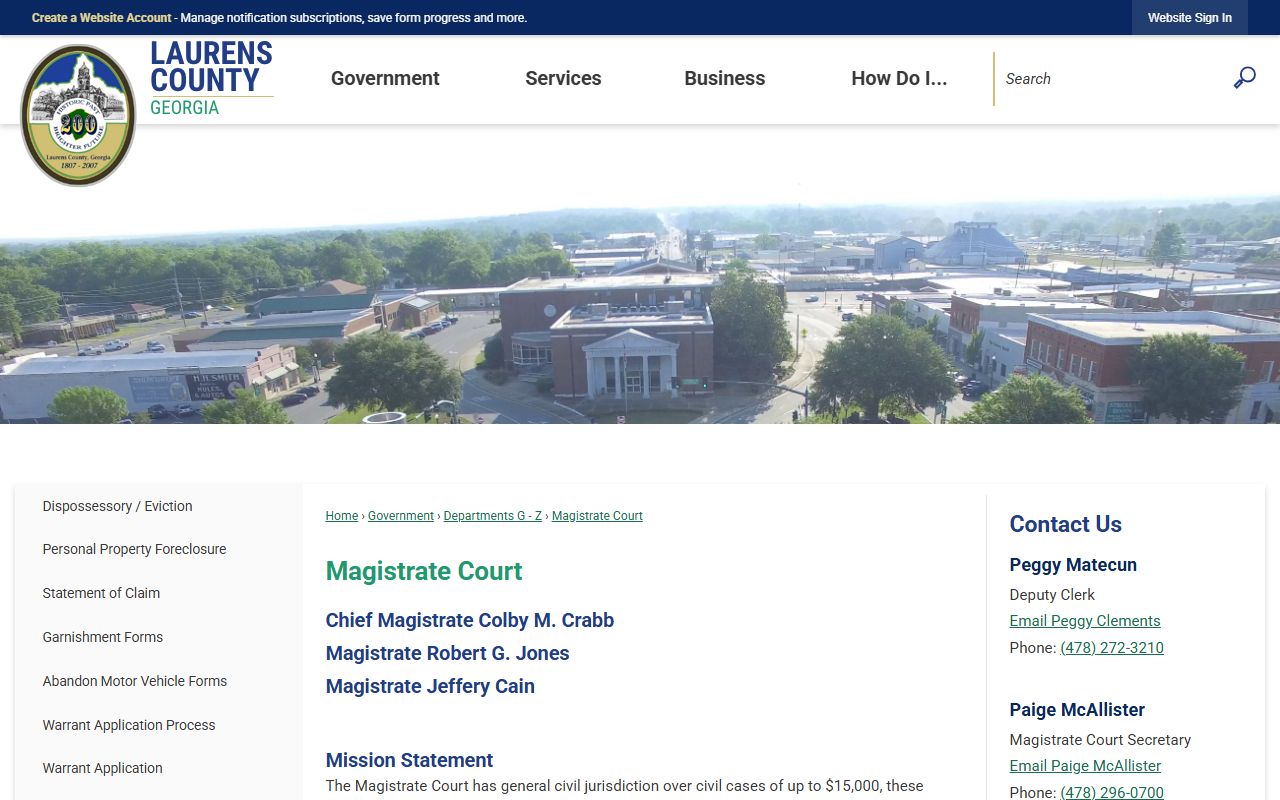
That local court source matters because many charge records start with a warrant, bond setting, preliminary hearing, or other early criminal event before the case reaches a later Superior Court file.
Search Laurens County Charges After Arrest
There is not one free public screen that combines every Laurens County arrest record, court charge, warrant, and jail record. The practical search path depends on the stage of the case. Start with the office that created the record. For custody status, use the jail roster or call the detention center. For warrants and first appearances, use Magistrate Court or the Sheriff’s Office. For filed Superior Court criminal charges, contact the Clerk of Superior Court or use account-based Georgia court access where available.
Prosecutor and defense contacts help explain who controls later charge decisions. Research names Harold McLendon as District Attorney for the Dublin Judicial Circuit, with a Dublin mailing address and phone 478-272-0440. The District Attorney prosecutes felony charges in Superior Court and can be relevant for eligible Georgia record-restriction requests. The Georgia Public Defender Council page names George Clayton Tapley as Public Defender for the Dublin Judicial Circuit, and Laurens County criminal division research lists the Public Defender phone as 478-272-7210. Those offices do not replace the clerk record search, but they explain why a booking charge can change after prosecutor review or appointed defense work.
- Check whether the person is currently in custody through the Laurens County jail roster or Detention Center contact path.
- For a warrant, bond, first appearance, preliminary hearing, or pre-warrant issue, contact Magistrate Court or the Sheriff’s Warrants Division.
- For a filed felony case, request the criminal case file or charging document through the Clerk of Superior Court.
- Use the District Attorney or Public Defender contact only for the role they serve: prosecution decisions or appointed defense questions.
The county research found account-based court access through Georgia court e-access sources, but it did not confirm a no-login Laurens-specific criminal charge portal. The Clerk of Superior Court is the core court-record custodian. If only a name, rough arrest date, or charge description is known, the clerk counter, sheriff phone line, or open-records request may be more useful than a portal search.
Laurens County Charging Documents
Charges after arrest are written into a charging document. Georgia records in Laurens County may use terms such as accusation, indictment, complaint, warrant application, or citation depending on the court and offense. Superior Court criminal files may include indictments, accusations, arraignment records, bond orders, motions, plea or disposition entries, and sentencing orders. Magistrate criminal records may include warrant applications, pre-warrant hearings, bond hearings, preliminary hearings, and selected misdemeanor or ordinance matters.
| Document | Who Uses It | What It Starts or Supports | Where to Check |
|---|---|---|---|
| Complaint or warrant application | Law enforcement, applicant, or court process | Early charge review, warrant request, pre-warrant hearing, or probable-cause issue | Magistrate Court or Sheriff’s Office |
| Accusation | Prosecutor | A formal criminal charge filed without a grand-jury indictment where allowed | Clerk of Superior Court or prosecuting office |
| Indictment | Grand jury through the prosecution process | Formal felony prosecution in Superior Court | Clerk of Superior Court |
For state support on Magistrate Court jurisdiction, the manifest image comes from O.C.G.A. § 15-10-2.
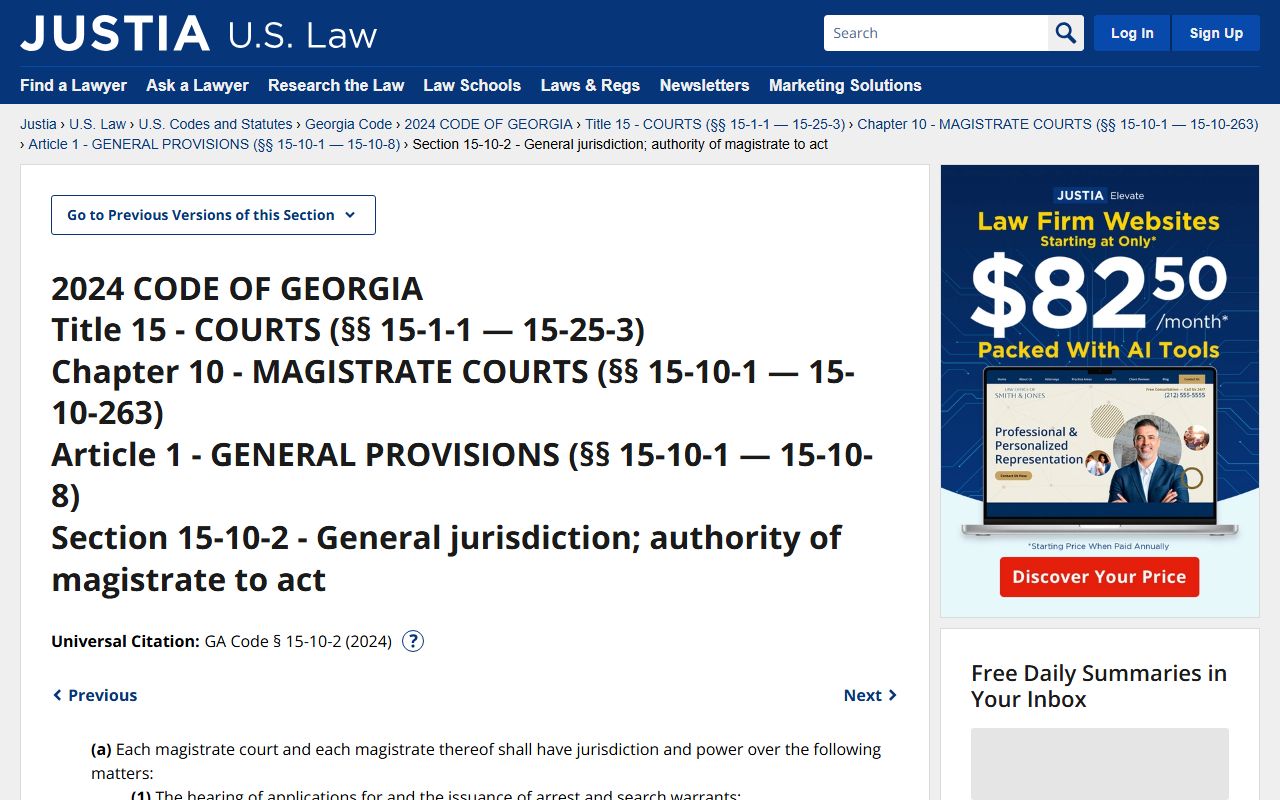
The statute source supports the local Magistrate Court discussion because Laurens warrant, bond, and preliminary-hearing records are part of the early charge pathway.
Laurens County Charge Status
A court charge can change after the first record appears. A charge may be pending at first appearance, then amended, reduced, dismissed, or moved into a final disposition. One arrest can produce more than one charge. A docket may also show bond set, preliminary hearing held, arraignment, plea, sentencing, or case transferred. Charge status should be read with the court date and disposition, because a current custody record may lag behind a court update.
| Status | What It Means | Why It Matters |
|---|---|---|
| Pending | The charge has been filed or is still active in the process. | No final outcome has been reached from the status alone. |
| Amended or reduced | The filed charge changed from the original allegation. | The current charge may differ from the booking entry. |
| Dismissed | The court record shows the charge did not continue to conviction. | The record may still exist unless restricted or sealed. |
| Nolle prosequi | The prosecutor chose not to continue that charge. | It is not the same as an acquittal, but it is not a conviction. |
| Disposed | The charge reached a court outcome such as plea, verdict, dismissal, or sentence. | The disposition must be read before treating the charge as final. |
The Georgia Bureau of Investigation record restriction page explains how eligible Georgia arrest and charge outcomes can be restricted for non-criminal-justice access.
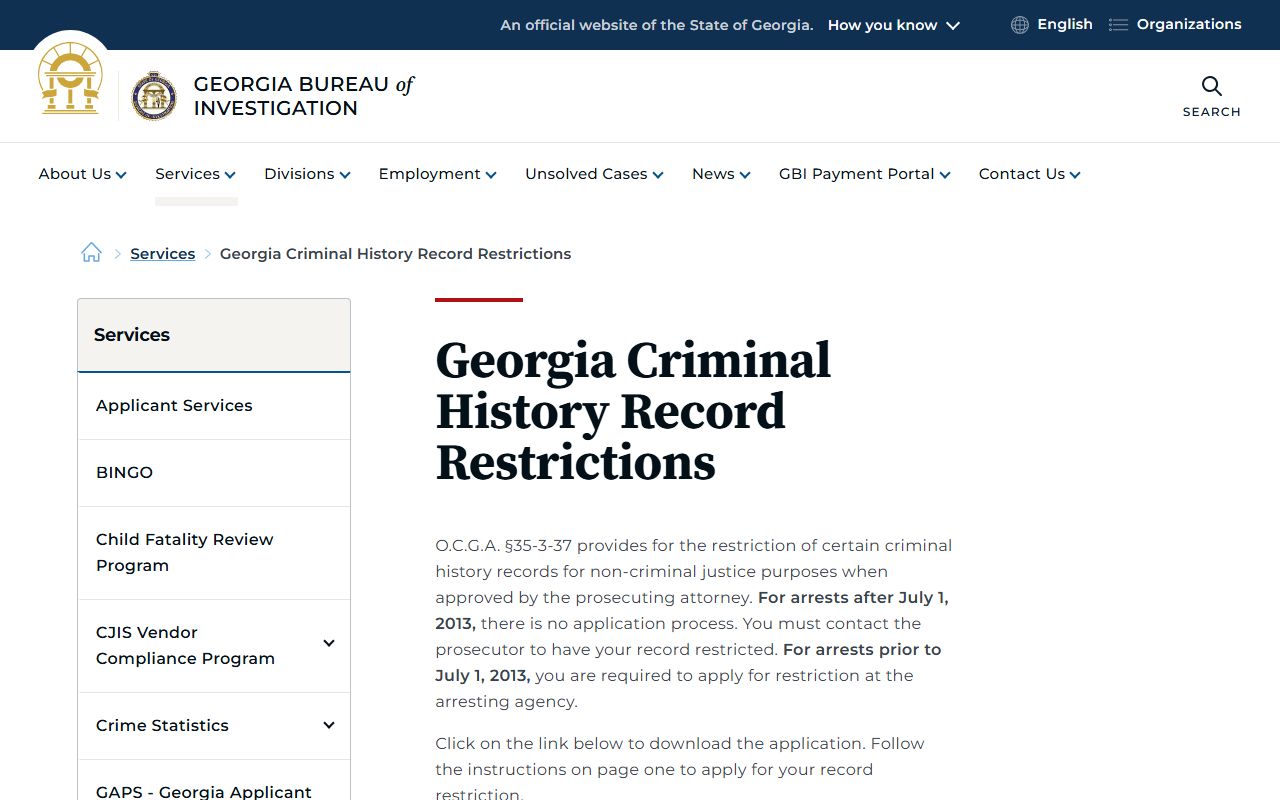
That source is relevant when a Laurens County arrest did not lead to conviction or when a person needs to ask which prosecutor or agency controls a restriction request.
Laurens County Charges vs Convictions
Being charged is not the same as being convicted. A charge is the formal claim that a person violated a criminal law. A conviction requires a guilty plea, verdict, or other qualifying court outcome. For Laurens County arrest records, this distinction is important because jail booking text, warrant language, and early court entries can show accusations before a judge or jury has resolved them.
| Point of Comparison | Charge | Conviction |
|---|---|---|
| Stage | Filed after arrest, warrant, citation, or prosecutor review. | Entered after plea, verdict, or qualifying disposition. |
| Meaning | An accusation in a court or custody record. | A final finding or admission of guilt. |
| Where Found | Booking records, warrant records, charging documents, and dockets. | Disposition entries, sentencing orders, and criminal history records. |
| Use Caution | A pending or dismissed charge should not be described as guilt. | Sentence, probation, restitution, and appeal status may still need review. |
Note: Read the disposition before treating any Laurens County charge record as a conviction record.
Statewide Arrest and Offender Lookups
State systems can help when a Laurens County charge has moved beyond the local jail or when the person may be serving a state sentence. The Georgia Department of Corrections covers people in state facilities, not a full county pretrial roster. Georgia.gov also notes that county jail inmates require county websites. That means a local Laurens County arrest may appear in OffenderIndex before it appears in any state prison search, and a state offender may no longer appear on the county roster after transfer.
The manifest includes the Georgia Department of Corrections location page for Laurens County Jail.
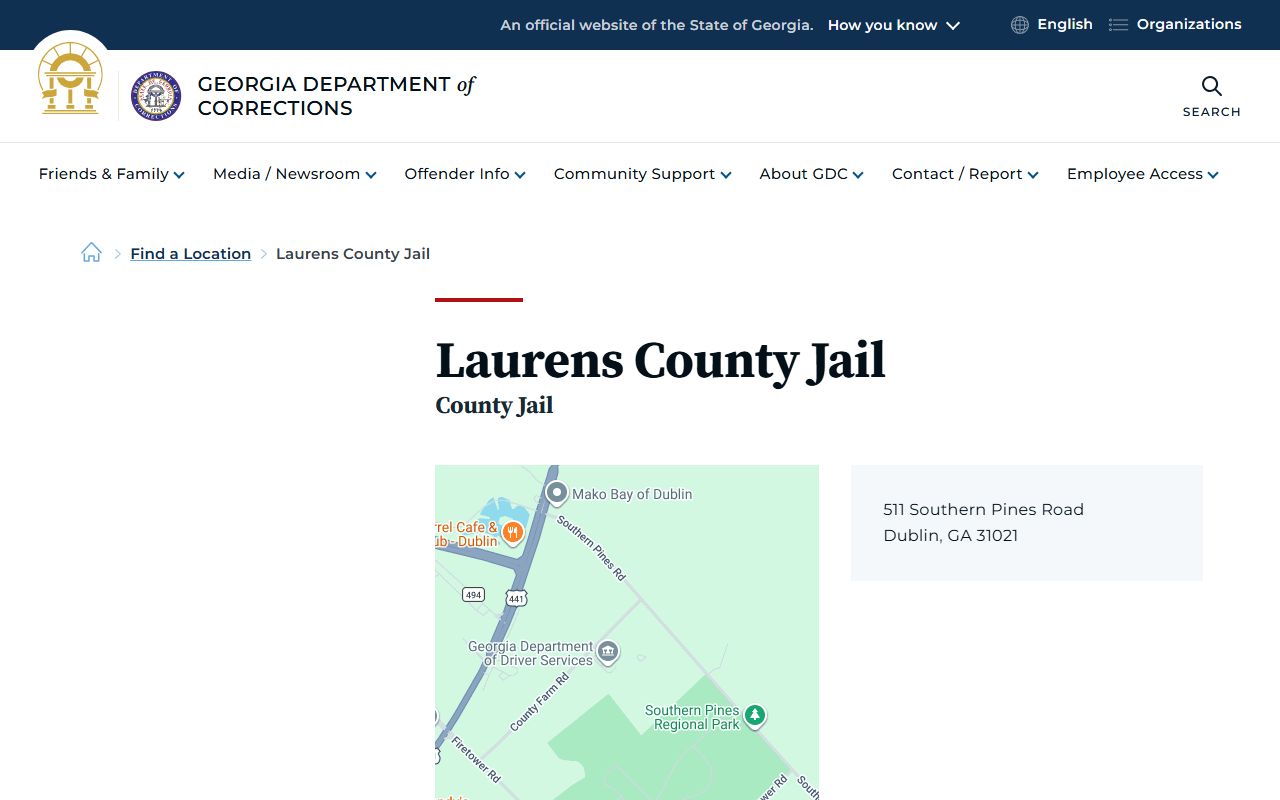
This state listing helps separate the county jail location from the statewide offender system, which is aimed at sentenced offenders in Georgia correctional custody.
The GDC Find an Offender search is another state-level source tied to sentenced custody.
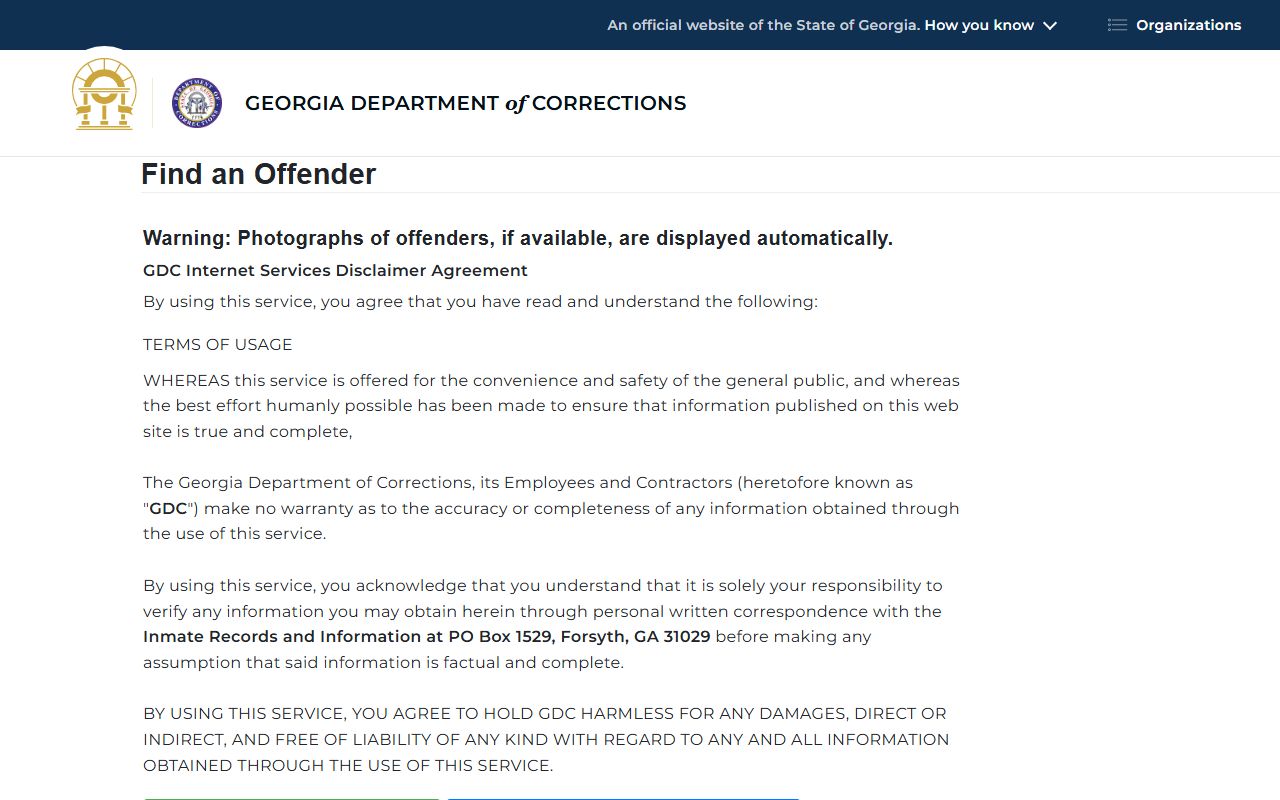
Use that system for Georgia Department of Corrections custody, not as proof that a Laurens County arrest charge is active or inactive in court.
The state Find an Offender explainer also distinguishes state offender searches from county jail searches.
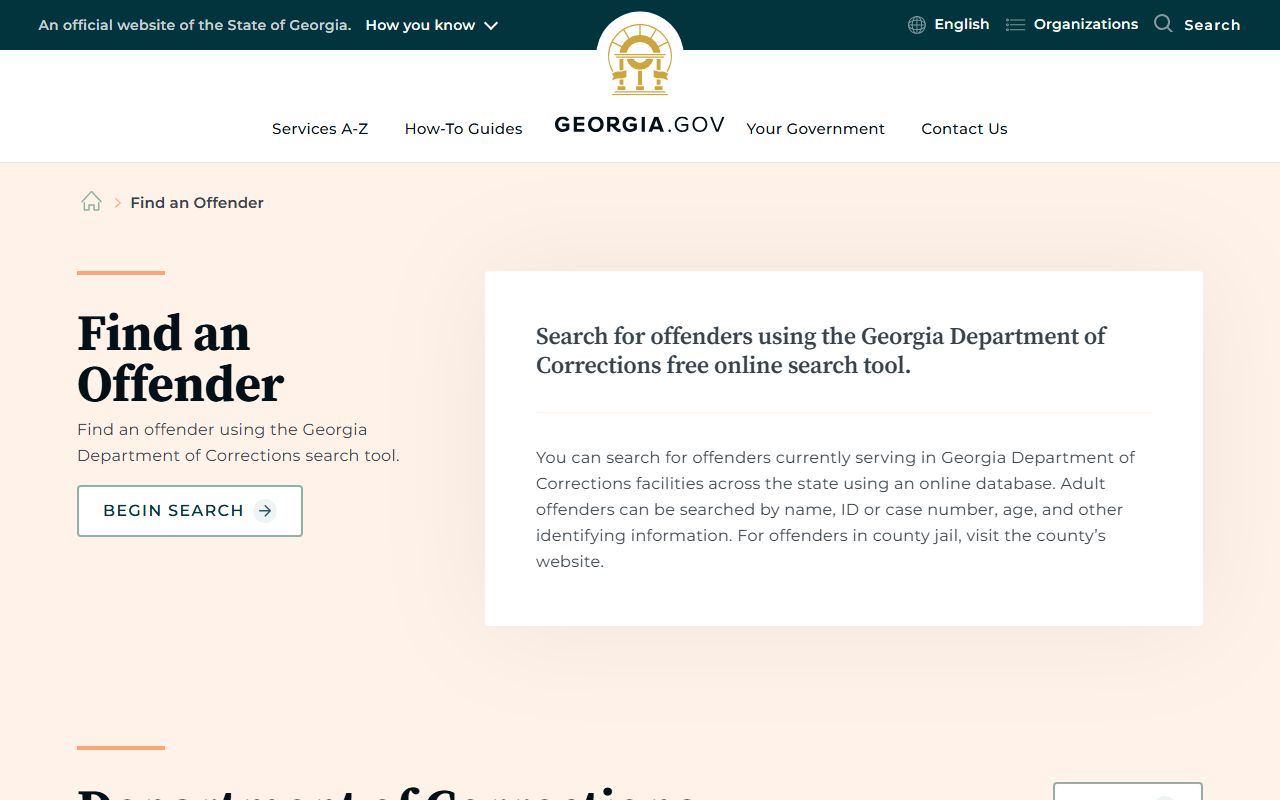
That distinction is useful for Laurens County records because arrest, charge, conviction, and custody status may live in different systems at different times.
Restricted Laurens County Charge Records
Georgia public access law starts with the Georgia Open Records Act, but that law has limits. O.C.G.A. § 50-18-70 et seq. allows inspection and copying of public records unless an exemption applies. O.C.G.A. § 50-18-72 allows withholding or redaction for protected categories. Criminal charge records may also be affected by O.C.G.A. § 35-3-37, the Georgia record restriction law cited by the GBI and Georgia Courts.
Juvenile records are a separate concern. Laurens County lists Juvenile Court under the clerk structure, but juvenile access is restricted. Sealed records, restricted criminal history, some law-enforcement or prosecution material, personal identifiers, medical data, and records sealed by court order may not be available in a public search. For arrests after July 1, 2013, GBI research says restriction requests route through the prosecutor. For older arrests, the application route can start with the arresting agency.
When a public charge-related record is not available through the clerk, jail roster, or court counter, the Laurens County administrative open-records form is a fallback. It asks for requester name, email, address, city, state, ZIP, a detailed description of the requested documents, delivery choice, and an electronic signature agreement. A useful request should name the person, agency, charge, court, date range, and whether the request is for a booking record, warrant record, charging document, docket entry, or disposition.
Important: Public charge lookups should not be used for credit, tenant, insurance, employment, or other FCRA-regulated screening.